

Released as a refined upgrade to the 2022 ATX 3.0 power supply standard, the ATX 3.1 specification was launched by Intel and PCI-SIG to resolve real-world flaws observed in early ATX 3.0 hardware, especially safety risks with the original 12VHPWR GPU connector and unstable transient power handling for next-gen PCIe 5 graphics cards.
While ATX 3.0 laid the foundation for high-wattage gaming and AI workstations, ATX 3.1 delivers targeted hardware, electrical, and safety upgrades that make power supplies far more reliable for modern GPUs like RTX 50 series and AMD RX 8000 lineup. This guide breaks down every official upgrade included in the ATX 3.1 standard, explaining how each tweak improves system stability, component safety, and long-term build durability.
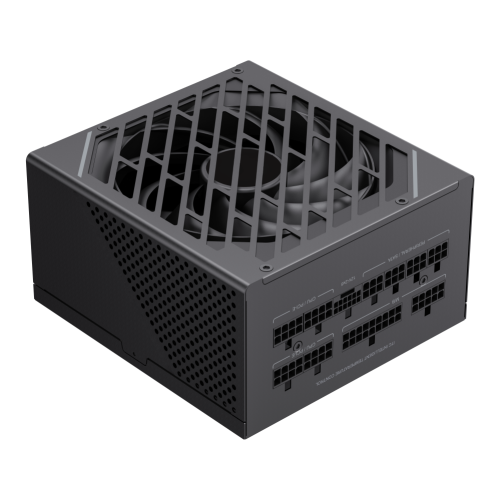
The single most impactful upgrade of ATX 3.1 is the replacement of the original 12VHPWR connector with the revised 12V-2x6 (H++) PCIe 5 power port, engineered to eliminate melted connector incidents caused by loose partial insertion. Two critical mechanical pin adjustments deliver built-in fail-safe protection:
Extended power pins (+0.25mm): The 12V power and ground terminals are lengthened to create full, low-resistance contact before signal pins engage, cutting heat buildup from incomplete connections.
Shortened sense detection pins (-1.5mm): The small sideband signal pins are recessed significantly. If the cable is not fully seated, these sense pins lose contact first, and the PSU automatically limits power output or shuts down the GPU port entirely to avoid thermal damage.
Additional connector upgrades under ATX 3.1:
Reinforced plastic housing around pin terminals to reduce bending and cable strain during installation
Tiered power limit communication logic between PSU and GPU: Three power tiers (100W / 300W / 600W) based on full insertion detection, rather than fixed 600W default in ATX 3.0
Full backward electrical compatibility with existing 12VHPWR cables, so legacy GPU hardware works without adapters
Industry testing confirms this pin redesign reduces connector melting risk by approximately 75% compared to early ATX 3.0 units with unmodified 12VHPWR ports.
ATX 3.0 introduced the 200% instantaneous power tolerance standard, but ATX 3.1 re-calibrates transient burst thresholds to match real power draw behavior of modern high-end GPUs that deliver rapid, multi-stage power surges during gaming, ray tracing and AI rendering. Key revised transient rules:
Maintains the mandatory 200% rated power burst capacity for 100 microseconds, the core requirement for flagship PCIe 5 GPUs
Tightens intermediate burst load windows: 180% power for 1ms and 160% power for 10ms now have stricter voltage fluctuation limits (max ±3% deviation vs ±5% in ATX 3.0)
Standardizes 150% sustained transient tolerance for 10ms, a new middle-tier requirement added to handle mid-length GPU power spikes that frequently triggered unexpected shutdowns on older ATX 3.0 PSUs
Mandates faster internal capacitor response speeds to suppress voltage drops during multi-card AI workstation loads
For builders running multi-GPU AI rigs, this refined transient tuning eliminates random crash issues caused by overlapping power spikes from multiple graphics cards.
ATX 3.1 upgrades two critical power delivery metrics that benefit 24/7 workstations and daily office/gaming PCs:
ATX 3.0 minimum hold-up requirement: 17ms
ATX 3.1 upgraded minimum hold-up time: 21ms
Longer hold-up time means the PSU can maintain stable DC power during brief wall AC power blips, preventing sudden system restarts, corrupted render files, or lost AI training progress during minor power fluctuations.
ATX 3.1 tightens idle power consumption rules for sleep, hibernate, and light browsing workloads:
Maximum standby power draw reduced to <0.1W when the PC is fully powered off (lower energy waste for always-plugged workstations)
Requires over 72% conversion efficiency at 20% light load, a higher baseline than ATX 3.0’s 70% minimum
Optimizes fan curve logic for low-load operation, lowering idle noise for silent office and content creation builds
This efficiency upgrade cuts long-term electricity costs for users who leave their PCs running AI training tasks overnight.
Intel revised core startup and safety circuit parameters under ATX 3.1 for faster, more stable system boot cycles:
Faster power-good signal timing: T1 boot delay reduced from <200ms (ATX 3.0) to <150ms, cutting motherboard POST startup lag for high-end motherboards with multiple PCIe slots
Recalibrated OVP / OCP / OPP protection trigger thresholds: Protection circuits now activate with gentler power cutoffs during minor overloads, avoiding hard instantaneous shutdowns that corrupt storage data
Standardized ripple noise limits across all voltage rails: ATX 3.1 caps 12V rail ripple at <30mV under full transient load, far stricter than the 120mV maximum allowed in ATX 3.0, reducing screen flickering and audio coil whine
All six mandatory safety protection circuits (OVP, UVP, OCP, OPP, SCP, OTP) are retained, but with faster response sensors to catch short-circuit or overheating risks milliseconds earlier.
While ATX 3.0 required a minimum 90% total power allocation to the 12V rail, ATX 3.1 raises the baseline standard for premium PSUs:
Flagship ATX 3.1 power supplies must route 100% of their continuous rated wattage to the single 12V rail by default
Multi-rail ATX 3.1 units receive stricter cross-rail current balance rules to prevent uneven power draw when running multiple GPUs
Voltage tolerance under full transient load tightened to ±2% for the 12V rail, compared to ±5% allowed in ATX 3.0
This upgrade is critical for AI workstations with dual or triple PCIe 5 GPUs, as a full 12V single rail eliminates power bottlenecks between separate voltage rails.
A key design goal of ATX 3.1 was to avoid rendering older PC hardware obsolete, so all legacy connectors and standards are fully supported:
Retains full set of traditional ports: 24pin motherboard, EPS 8pin CPU, SATA, Molex, and 6+2 PCIe GPU cables
Works seamlessly with ATX 2.x and ATX 3.0 motherboards, PCIe 3/4 generation graphics cards, DDR4/DDR5 memory and all storage drives
12V-2x6 cables plug into older 12VHPWR GPU ports without adapters, with automatic power limit negotiation between PSU and GPU
Users upgrading an existing PC do not need to replace other components when switching to an ATX 3.1 compliant power supply.
表格
| Feature | ATX 3.0 Standard | ATX 3.1 New Upgrades |
|---|---|---|
| GPU Connector | 12VHPWR (H+) | 12V-2x6 (H++) with safety pin length adjustment |
| Minimum Hold-Up Time | 17ms | 21ms |
| Low Load Efficiency Baseline | 70% @20% load | 72% @20% load |
| Boot T1 Delay | <200ms | <150ms |
| 12V Rail Voltage Deviation | ±5% max transient | ±2% max transient |
| Connector Safety Interlock | Basic power detection | Full partial-seat power limitation |
An ATX 3.1 power supply delivers meaningful benefits for these build types:
✅ Flagship single-GPU gaming rigs (RTX 4090 Super, RTX 5090, RX 7900 XTX / RX 8000 series)
✅ Multi-GPU AI workstations for rendering, model training and video editing
✅ Long-term future-proof builds planned for 3–5 years of hardware upgrades
✅ Users who previously experienced GPU connector heating or random PC shutdowns with ATX 3.0 units
✅ Silent office workstations that run 24/7 with low idle load requirements
For budget mid-range PCs with sub-200W GPUs, high-quality ATX 3.0 PSUs still deliver stable performance, but ATX 3.1 remains the safer long-term investment for new builds.
ATX 3.1 is a refined iterative update, not a full rewrite. It keeps ATX 3.0’s core 200% transient power requirement but adds targeted safety, efficiency and connector improvements based on real-world hardware failure data collected after ATX 3.0’s release.
Yes, physical compatibility is fully maintained. However, the original 12VHPWR cable lacks the revised safety pin design, so the partial-connection power lock feature will not activate when using older cables. Native 12V-2x6 cables are recommended for full ATX 3.1 safety functionality.
No, wattage sizing rules stay identical. The upgraded standard only improves power delivery stability, it does not increase the minimum power requirements for any GPU or CPU.
The upgrades introduced in the ATX 3.1 specification focus on fixing real safety and stability pain points discovered in early ATX 3.0 power supplies, with the redesigned 12V-2x6 GPU connector standing out as the most vital improvement for modern PCIe 5 hardware. Combined with refined transient power handling, longer hold-up time, better low-load efficiency and tighter voltage regulation, ATX 3.1 creates a more robust, fail-safe power delivery standard for gaming PCs, content creation rigs and multi-GPU AI workstations.
Our factory manufactures a full lineup of fully ATX 3.1 certified power supplies ranging from 550W to 1600W, supporting flexible OEM & ODM customization for global hardware brands, gaming integrators and AI workstation system builders. All units implement the complete 12V-2x6 safety connector design and full single-rail 12V output to meet the latest Intel ATX 3.1 specification requirements.


