

If you are building a gaming PC, AI workstation or upgrading high-end PCIe 5 graphics cards, you must have seen the term ATX 3.0 PSU everywhere. Many users only know it matches new GPUs but cannot figure out what the official ATX 3.0 standard actually defines, how it differs from old ATX 2.x power supplies, and whether your rig truly needs one.
Released by Intel in March 2022, ATX 3.0 is the first major overhaul of desktop power supply specifications in nearly 20 years, fully redesigned to resolve the extreme transient power spikes of RTX 40/50 series and AMD RX 7000/8000 GPUs, while introducing the native 12VHPWR PCIe 5 connector for safer, cleaner GPU power delivery. This guide breaks down every official requirement of the ATX 3.0 standard, explains its core upgrades, compatibility rules, and real-world benefits for gamers, creators and AI workstation builders.
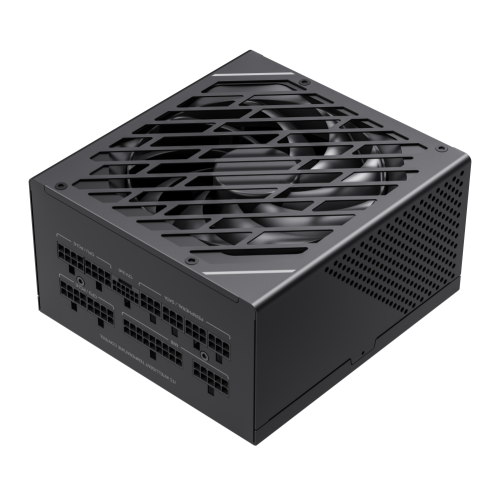
Before diving into technical specs, it’s critical to understand why Intel launched ATX 3.0 in the first place:
Modern high-end GPUs can draw 3x their rated TDP power within 100 microseconds during intense gaming, ray tracing or AI rendering loads. Old ATX 2.52 PSUs lack the transient tolerance to handle these sudden surges, leading to random shutdowns, crashes, or voltage drops that damage hardware over time.
The PCIe Gen 5 platform required a dedicated high-power connector to deliver up to 600W to a single graphics card, eliminating unsafe multi-adapter cable setups that caused melting connector incidents in early GPU builds.
New low-power sleep modes for modern motherboards and AI workstations demanded stricter idle efficiency and precise voltage regulation that legacy power standards could not meet.
In short: ATX 3.0 was built exclusively for next-gen high-power hardware, with two non-negotiable core pillars: enhanced transient power handling and native PCIe 5 12VHPWR support.
This is the biggest technical upgrade separating ATX 3.0 from all previous PSU standards. Every ATX 3.0 certified power supply must pass strict burst power testing with fixed time & load thresholds, defined by Intel’s official design guide:
200% of continuous rated power for 100 microseconds (μs): A 1000W ATX 3.0 PSU can safely deliver 2000W instantaneous power to absorb GPU power spikes
180% rated power for 1 millisecond (ms): Handles mid-length load surges without triggering over-power protection
160% rated power for 10 ms: Sustained short bursts during gaming scene transitions
120% rated power for up to 100 ms: Longer heavy load periods without instability
Old ATX 2.x PSUs only support a maximum 120% peak power for brief bursts, making them unable to absorb the extreme power draw of flagship PCIe 5 GPUs. Even if you use an adapter cable to run a 4090 on an older PSU, you face consistent crash risks during gameplay or AI workloads.
The most visible feature of any ATX 3.0 PSU is the integrated 12VHPWR port, a mandatory requirement for all fully compliant ATX 3.0 models:
Single cable delivers up to 600W steady power: Replaces messy stacks of 6+2 PCIe power cables for top-tier graphics cards, drastically reducing internal cable clutter and improving chassis airflow.
Built-in sideband signal (SBS) pins: Enables real-time two-way communication between the PSU and GPU. The power supply instantly adjusts output voltage based on the graphics card’s predicted power demand, preventing sudden voltage drops during spikes.
No third-party adapter reliance: Adapters used on non-ATX 3.0 PSUs create weak connection points, heat buildup and melting hazards. ATX 3.0 native 12VHPWR cables eliminate this risk entirely.
Note: Early ATX 3.0 units use the original 12VHPWR design, while its successor ATX 3.1 upgrades to the revised 12V-2x6 connector with longer safety sense pins – but the core 600W power delivery standard remains identical.
ATX 3.0 tightens rules for the 12V rail, which supplies over 95% of power to modern CPUs, GPUs and cooling hardware:
100% power allocation to the 12V rail (premium ATX 3.0 models): Top-spec ATX 3.0 PSUs route all rated wattage through the primary 12V rail, instead of splitting limited power between 12V, 5V and 3.3V rails like budget old-standard units. This is ideal for high-wattage gaming and AI workstations.
Strict voltage deviation limits: Under full transient load, all voltage rails (12V, 5V, 3.3V) must stay within ±5% tolerance, with high-quality ATX 3.0 units holding fluctuations under ±2% for ultra-stable component operation.
Reduced ripple & electrical noise: ATX 3.0 enforces tighter ripple limits on the 12V output, cutting electronic interference that causes audio static, screen flickering and hardware degradation.
While 80 PLUS certification is separate from the ATX 3.0 standard, Intel’s guidelines strongly recommend minimum 80 PLUS Bronze efficiency, and most mainstream ATX 3.0 PSUs adopt Gold, Platinum or Titanium ratings. ATX 3.0 also improves low-load efficiency: units maintain over 70% conversion efficiency even at 20% light load, cutting idle power waste for workstations that run 24/7 for AI rendering or server tasks.
All ATX 3.0 power supplies must integrate six core safety protection mechanisms, with faster response times than legacy PSUs:
OVP (Over Voltage Protection)
UVP (Under Voltage Protection)
OCP (Over Current Protection)
OPP (Over Power Protection)
SCP (Short Circuit Protection)
OTP (Over Temperature Protection)
A common misconception: ATX 3.0 PSUs work seamlessly with all older hardware, including ATX 2.x motherboards, PCIe 4 GPUs and legacy SATA/Molex peripherals. The standard retains all traditional 24pin motherboard, EPS CPU and PCIe 6+2 connectors, so you can reuse your existing PC components while retaining upgrade headroom for future PCIe 5 hardware.
After reviewing the official ATX 3.0 specifications, you can confirm if this standard fits your build: ✅ Must choose ATX 3.0 if you own/plan to buy:
RTX 40/50 series, AMD RX 7000/8000 flagship GPUs (300W+ TDP)
AI workstations with multi-GPU setups for stable rendering and training
High-end overclocked gaming rigs prone to large power spikes
Long-term builds that want future-proofing for next-gen hardware
❌ ATX 2.52 PSU is sufficient for:
Office PCs with low-power integrated graphics
Mid-range GPUs under 200W TDP (RTX 3060, RX 6600 and below)
Budget mini ITX builds without plans for GPU upgrades
No. PCIe Gen 5 is a graphics card data transfer standard, while ATX 3.0 is a power supply electrical specification. ATX 3.0 PSUs fully support PCIe 5 GPUs, but PCIe 5 hardware can technically run on non-ATX 3.0 PSUs with adapters (not recommended for safety).
Absolutely. ATX 3.0 maintains full backward compatibility with all legacy PCIe generations, CPUs and motherboards. The native 12VHPWR port remains unused, and standard PCIe cables power your GPU normally.
ATX 3.1 is a minor safety revision built on ATX 3.0’s core transient power rules. It tweaks the 12VHPWR connector design for better contact reliability but does not change the 200% transient power threshold or 600W GPU power limit defined in ATX 3.0. Most 2023–2024 ATX 3.0 models still deliver stable performance for modern GPUs.
The ATX 3.0 power supply standard is far more than just a new PCIe 5 connector upgrade. Its official specifications center on industry-leading transient power tolerance, tighter voltage regulation, and safer native high-power GPU delivery, solving the biggest stability flaws of older ATX 2.x power supplies when paired with modern high-performance hardware.
For anyone building a gaming PC, AI workstation or planning GPU upgrades within the next 3–5 years, an ATX 3.0 compliant PSU is the most reliable long-term investment to avoid crashes, hardware damage and cable safety risks. Our factory develops full lines of ATX 3.0 certified power supplies with complete wattage ranges from 550W up to 1600W, supporting OEM & ODM customization for gaming brands, workstation integrators and global hardware retailers.


