

A desktop PC power supply unit (PSU) is the core hardware that converts alternating current (AC) from wall outlets into stable direct current (DC) for all computer components. Most ordinary users only focus on PSU wattage, but a qualified desktop PSU involves a complete set of official specifications, electrical parameters, structural standards, safety certifications, and interface rules.
To help you accurately identify genuine high-performance PSUs, avoid shoddy products, and match compatible power supplies for ATX 3.1 and PCIe 5.0 gaming builds, this guide fully breaks down all core specifications of desktop PC power supplies in detail, covering every key parameter that affects system stability, service life, and compatibility.
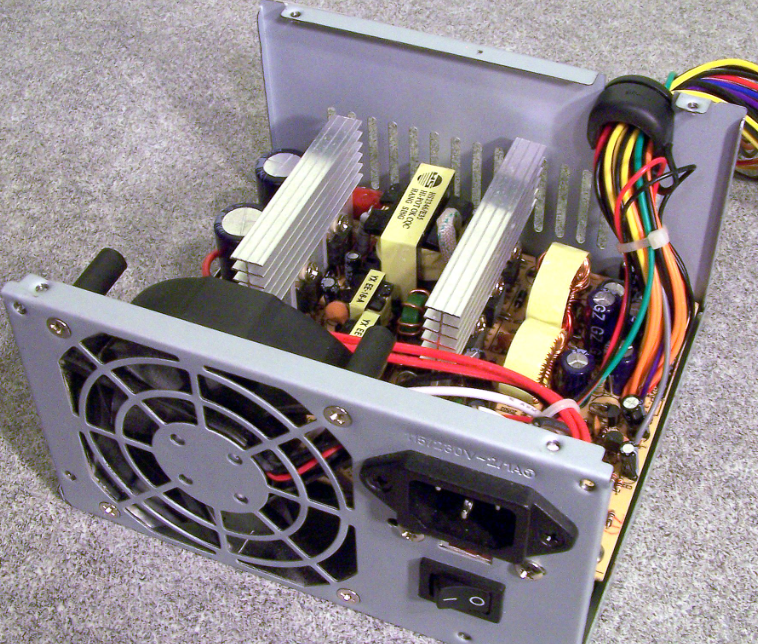
Wattage is the most intuitive PSU specification, but many users confuse peak power with continuous power, which leads to system instability after installation.
Continuous wattage refers to the maximum stable power a PSU can output 24/7 under standard ambient temperature (40°C). This is the only valid power reference standard for desktops. All formal brand PSUs mark clear continuous wattage, which determines the maximum load capacity of the power supply.
Common mainstream specifications: 550W, 650W, 750W, 850W, 1000W, 1200W, 1300W and above (flagship gaming models).
Peak wattage is the instantaneous burst power that the PSU can only sustain for a few seconds. It cannot support long-term operation and is mostly used by low-end fake PSUs for false publicity. When purchasing, only refer to continuous wattage and ignore peak wattage.
Desktop PSUs are divided into three core voltage rails, with different power supply objects and specification standards:
12V Rail (Core Power Rail): Supplies power to CPU, GPU, fans, and water cooling pumps. More than 95% of the power of modern gaming desktops comes from the 12V rail. High-quality PSUs support 100% full-load power output on the 12V rail, which is the key to supporting high-power PCIe 5.0 GPUs.
5V Rail: Supplies power to motherboards, SSDs, and peripheral accessories.
3.3V Rail: Mainly supplies power to motherboard chips and memory modules.
Standard specification requirement: The voltage deviation of all rails must be controlled within ±5% under full load; high-quality premium PSUs can achieve±1%~±2% ultra-low deviation to ensure long-term stable operation of components.
The ATX standard formulated by Intel defines all manufacturing and electrical specifications of desktop PSUs, which is the core basis for judging whether a power supply is compatible with new hardware.
ATX 2.52 (Traditional Standard): Suitable for old-generation low-power GPUs and office desktops, without supporting high transient power burst requirements.
ATX 3.0 Standard: Launched for RTX 40 series GPUs, supporting 200% instantaneous power burst for 100 microseconds, solving the problem of sudden power failure and crash of high-power graphics cards.
ATX 3.1 Standard (Latest Official Specification): Optimized and upgraded on the basis of ATX 3.0, added 150% power transient tolerance for 10 milliseconds, adopted standardized 12V-2x6 interface, and stricter voltage regulation and safety standards, which is the best specification for current and future 2-3 generations of hardware upgrades.
80 PLUS is the authoritative energy efficiency certification for global PC power supplies, which specifies the energy conversion efficiency of PSUs under 20%, 50%, and 100% loads. Higher efficiency means lower power consumption, less heat generation, and quieter operation.
Full specification grade from low to high:
80 PLUS White: Basic entry-level efficiency, suitable for low-power office computers;
80 PLUS Bronze: Cost-effective mainstream grade, meeting daily gaming needs;
80 PLUS Silver: Mid-range energy efficiency, low heat generation;
80 PLUS Gold: The recommended minimum standard for gaming desktops, with stable efficiency and high cost performance;
80 PLUS Platinum: Premium high efficiency, ultra-low power consumption, quieter and more durable;
80 PLUS Titanium: Top-level energy efficiency specification, suitable for high-end flagship builds.
It is worth noting that ATX 3.1 standard PSUs basically take 80 PLUS Gold as the baseline, and premium models are fully upgraded to Platinum level.
The interface specification determines the hardware compatibility of the PSU. A full set of standard interfaces can meet the assembly needs of office, gaming, and high-end overclocking hosts.
24Pin Motherboard Main Power Interface: Universal standard for all desktop motherboards, responsible for the overall power supply of the motherboard;
EPS 8Pin/8+4Pin/8+8Pin CPU Power Interface: For high-power CPUs such as Intel i7/i9 and AMD Ryzen 7/9. The more interfaces, the stronger the CPU overclocking stability;
PCIe 6+2Pin Graphics Card Interface: Traditional universal graphics card power interface, single port stable 150W power supply;
12V-2x6 (12VHPWR) PCIe 5.0 Interface: The exclusive standard interface for new-generation flagship GPUs, supporting up to 600W single-line power supply, solving the safety risk of traditional adapter cables;
SATA Interface: For SSD, HDD hard disk and RGB accessories power supply;
Molex 4Pin Peripheral Interface: Legacy interface, used for old fans and peripheral equipment power supply.
PSU structural specifications affect chassis compatibility and cable management aesthetics, divided into three mainstream types:
Non-modular PSU: All cables are fixed, low cost, many redundant cables, poor heat dissipation;
Semi-modular PSU: Main power cables are fixed, peripheral cables are detachable, balanced in cost and simplicity;
Fully Modular PSU: Premium mainstream specification, all cables detachable, free wiring, optimized chassis airflow, suitable for high-end gaming builds.
In addition, according to the chassis size, it is divided into ATX standard size, SFX small size, TFX thin size, meeting the installation needs of large chassis and mini ITX small chassis respectively.
Complete protection mechanisms are the core guarantee for the long service life of the PSU and component safety. Qualified desktop PSUs must have 6 major protection functions:
OVP (Over Voltage Protection): Automatically power off when the output voltage is too high to avoid burning components;
UVP (Under Voltage Protection): Prevent system crash and damage caused by too low voltage;
OCP (Over Current Protection): Avoid component burnout caused by excessive instantaneous current;
OPP (Over Power Protection): Cut off power when the total load exceeds the rated power;
SCP (Short Circuit Protection): Instant power off in case of short circuit of internal or external circuit;
OTP (Over Temperature Protection): Prevent burnout caused by excessive internal temperature of the PSU under high load.
Internal configuration determines the stability and service life of the PSU, which is a hidden specification that most users ignore:
Capacitor Specification: Premium PSUs adopt 105°C full Japanese capacitors, with low attenuation and long service life; ordinary products use low-temperature capacitors, which are easy to aging and cause power failure;
Fan Specification: 120mm/140mm hydraulic or FDB silent fan, supporting intelligent speed regulation, low noise at low load and strong heat dissipation at high load;
Ripple & Noise Specification: High-quality PSUs control ripple noise below 30mV, far lower than the official 120mV standard, avoiding audio noise and component aging.
When purchasing or detecting a desktop power supply, you can quickly check all standard specifications through the following methods to avoid stepping on pitfalls:
Check the continuous rated wattage and 12V rail output ratio on the official parameter sheet;
Confirm whether it supports ATX 3.1/3.0 new standards and PCIe 5.0 native interface;
Verify the 80 PLUS energy efficiency grade and full protection circuit configuration;
Check internal configuration: capacitor grade, fan type, modular structure;
Confirm chassis size compatibility and complete interface quantity to meet hardware assembly needs.
The full specifications of a desktop PC PSU cover power wattage, industry version standards, energy efficiency certification, interface compatibility, structural design, protection circuits, and internal hardware configuration. Only by comprehensively referring to all specifications can we select a power supply with stable output, strong compatibility, long service life and no hidden safety hazards.
For modern gaming desktops equipped with PCIe 5.0 GPUs and new-generation CPUs, ATX 3.1 standard + 80 PLUS Gold/Platinum high efficiency + full 12V rail output + complete protection mechanism is the most worthy configuration standard for long-term use.


